

It’s that time of the (new) year, where resolutions, goal setting, and strategising for the 12 months ahead have begun. Cash registers are ringing from an increase in sales of diaries, journals, post-its and colourful pens that may or may not be forgotten about after a couple of months.
Some people see these new years’ traditions as a mere fad or a kind of satirical custom – the satire being that people often make or state changes that don’t make it past January 31st. But perhaps you’re one of those who takes the resetting of a year as a solemn time to reflect, reorganise, and establish new life habits and goals. Maybe you’ve already started budgeting, creating vision boards, and revising unmet targets from the previous year to aim towards a more fulfilling 12 months than the last – all of which are great, but have you considered fasting as part of your new years’ practices? Yes, it’s not as pretty as cutting out pictures to place on your vision boards. Still, it carries health advantages and, more importantly, spiritual benefits that lend to living a fulfilled life.
So if a thriving life is part of your 2022 plans, read on to learn about fasting and the benefits it brings.
What is Fasting?
According to the dictionaries definition, Fasting is abstinence from food or drink or both for health, ritualistic, religious, or ethical purposes. The abstention may be complete or partial, lengthy, short in duration, or intermittent.
Things to note: Fasting from food altogether may not be possible for those with medical issues. So as an alternative, they may opt to abstain only from certain foods, like sugar or chocolate, or from something other than food. In truth, believers may fast from anything. Doing without something temporarily, such as television or social media, as a way of redirecting our focus from earthly things toward God, can also be considered a spiritual fast. What matters is the posture of the heart.
What happens spiritually when you fast?
When you fast, you bring your flesh into subjection by denying it of its basic desires, such as food, entertainment, and other indulgences, and feed your spirit with the Word and presence of the living God. Fasting is an important practice because the Bible informs us that “those who are in the flesh cannot please God” (Romans 8:8), and again that “God is Spirit and those who worship must worship in spirit and truth” (John 4:24). So at its very basis, fasting is an essential part of a believers lifestyle of working out our salvation (Philippians 2:12). It is the turning down of the desires of our flesh in exchange for spiritual heightening. When we fast, we submit to the grace He has made available to us to walk in a manner worthy of the Lord, fully pleasing to Him (Colossians 1:10).
Why is this beneficial?
It can be seen as a way of sowing into the year ahead. Galatians 6:7-8 says, “Do not be deceived – God is not mocked, for whatever one sows, that he will also reap. For the one who sows to his own flesh will from the flesh reap corruption, but the one who sows to the Spirit will from the Spirit reap eternal life”. Now, this is not to say that your salvation hinges on whether you fast or not, but the point is that sowing to the Spirit will reap the fruit of the Spirit.
Jesus commands us to seek His kingdom and righteousness first, and all other things (goals, desires etc.) will be added onto us (Matthew 6:33). That means not only does seeking His face take pre-eminence over all other ambitions and dreams but that those plans are founded in Him. So the benefit of putting God first before our wants is a strategy to achieve what we desire.
Another benefit to fasting at the beginning of the year is to set a solid foundation, that foundation being Jesus and building from there. The Bible refers to ‘firstfruits’ as an offering to God, referring to His command to give the best of our first harvest year by year (Exodus 23:16-19; Nehemiah 10:35). This offering is a way of acknowledging and honouring Him as the giver and owner of all things. Firstfruits express our thankfulness to Him for the seasons past and the seasons to come. And although giving the firstfruits as an offering isn’t a requirement, it is an expression of faith in God as the One who has and will supply all our needs according to His riches in glory (Philippians 4:19). And yes, there are undoubtedly other ways to offer to God – such as financial offerings, for instance, but there is something unique about offering your very being – what you consume, how you spend your time – as a firstfruit offering to the Lord. It is the most fundamental way we worship Him, as it says in Romans 12:1, “present your bodies as a living sacrifice, holy and acceptable to God, which is your spiritual worship”.
Things to note: When fasting, be sure to engage in spiritual activities such as meditating and studying the word of God, along with prayers. Abstaining from foods and entertainment without communing with God and giving your attention to Him – is not fasting and is more of a hunger strike.
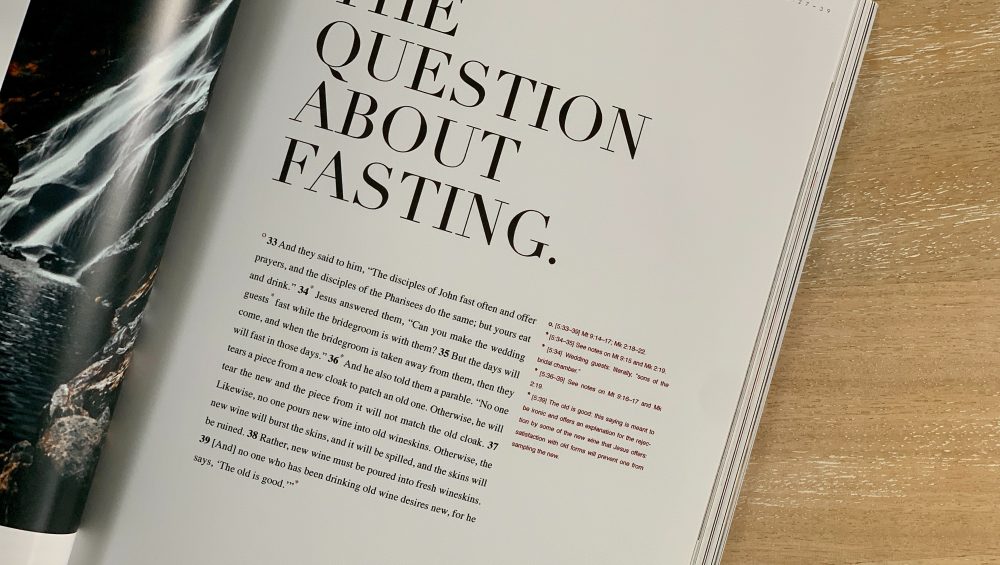
Finally, in keeping with the new Year’ theme, remember that new wine cannot be put in old wineskins (Mark 2:22). So while many of us hope for a reinvigorated spiritual life and a year full of new spiritual blessings, we cannot continue with old carnal habits and expect newness to arrive.
So be encouraged to set time aside to fast; purge yourself of what is unfit, so that you will be a vessel for honour: sanctified, useful to the Master, and prepared for every good work in the year ahead (2 Timothy 2:21).
Words by Annette Tony-Fadipe
Found this article useful? Why not share with a friend or relative to encourage them.
